CC0 · Direct download581×900 · 203 KB
Specifications
- Type
- Illustration
- Format
- jpg
- Size
- 203 KB
- Published
- Nov 11, 2026
- Updated
- Nov 11, 2026
- AI
- Human-made
- Tags
CC0IllustrationCommercial use allowed
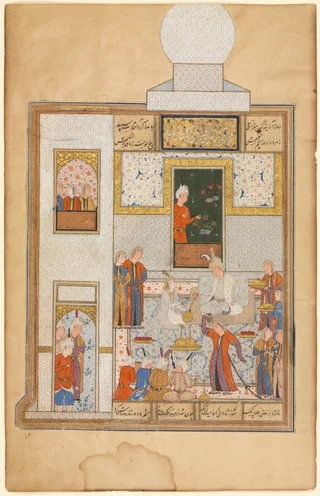
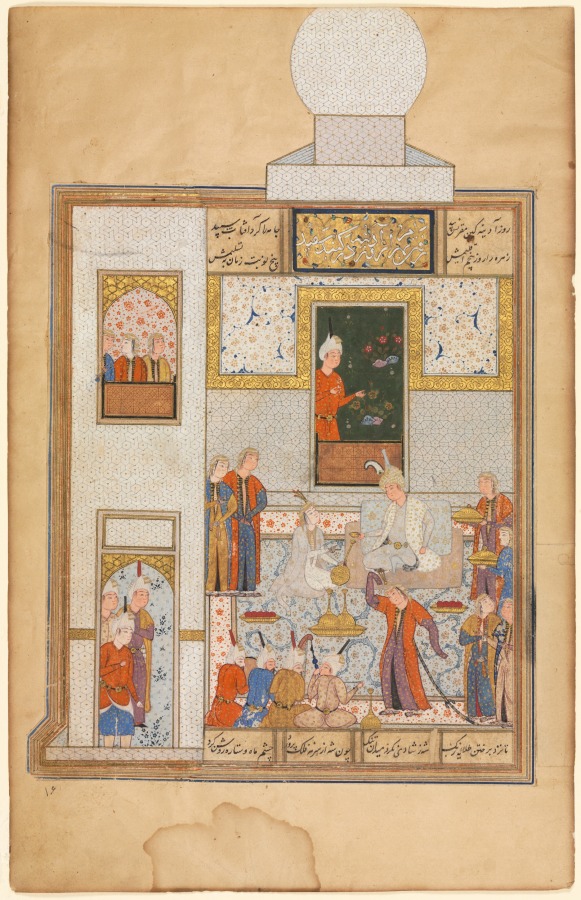
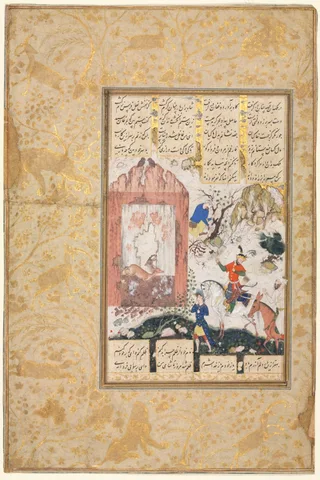
Bahram Visits the White Domed Pavilion on Friday, illustrated with text in Khamsa of Nizami (verso), from a Haft Paykar (Seven Portraits) of Nizami
opaque watercolor, ink, and gold on paper · c. 1560–80 · Iran, Shiraz, Safavid period (1501-1722) · Islamic Art
LicenseRead the full license →
Commercial use
✓ Allowed
Attribution
Not required
Modification
✓ Allowed
Share-alike
Not required
The creator waived all copyright. Commercial use, modification and redistribution are allowed with no attribution required.
Credit"Bahram Visits the White Domed Pavilion on Friday, illustrated with text in Khamsa of Nizami (verso), from a Haft Paykar (Seven Portraits) of Nizami" by Unknown creator, dedicated to the public domain under CC0 1.0 (https://creativecommons.org/publicdomain/zero/1.0/).
Official license text ↗License snapshot
This file is released under CC0. The license text and credit requirements are below.
Related assets
View all →
Rustam meets the challenge of Ashkabus, from a Shah-nama (Book of Kings) of Firdausi (Persian, about 934–1020)
IllustrationjpgCC0
Commercial OKView →
Nushirwan Listens to the Owls (recto); the Story of Nushirwan and his Minister, "The Third Discourse on Diverse Events and Disorder in Life" (verso) from a Khamsa (Quintet) of Nizami (1141–1209)
IllustrationjpgCC0
Commercial OKView →
Nushirwan Listens to the Owls (recto): Illustration and Text, Persian Verses, from a Manuscript of the Khamsa of Nizami, Makhzan al-Asrar [Treasure of Secrets]
IllustrationjpgCC0
Commercial OKView →
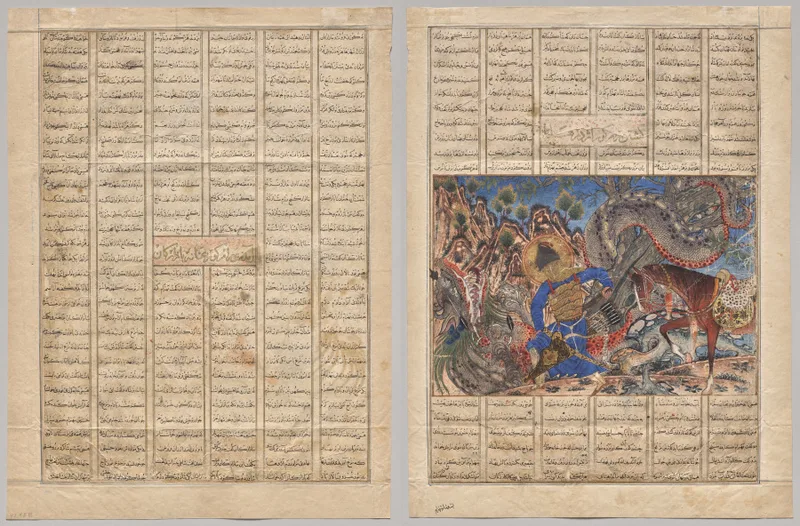
Bahram Gur Arrives at the House of a Merchant, text page (recto); Bahram Gur Slays a Dragon (verso), from a Shahnama (Book of Kings) of Firdausi (940–1019 or 1025), known as the Great Mongol Shahnama
IllustrationjpgCC0
Commercial OKView →
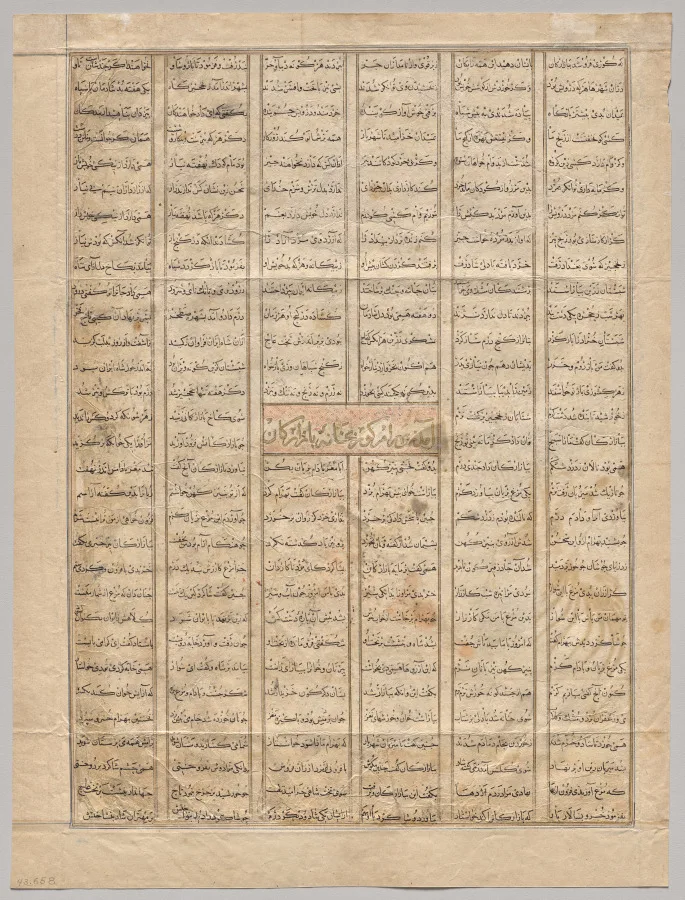
Bahram Gur Arrives at the House of a Merchant, text page (recto), from a Shahnama (Book of Kings) of Firdausi (940–1019 or 1025), known as the Great Mongol Shahnama
IllustrationjpgCC0
Commercial OKView →
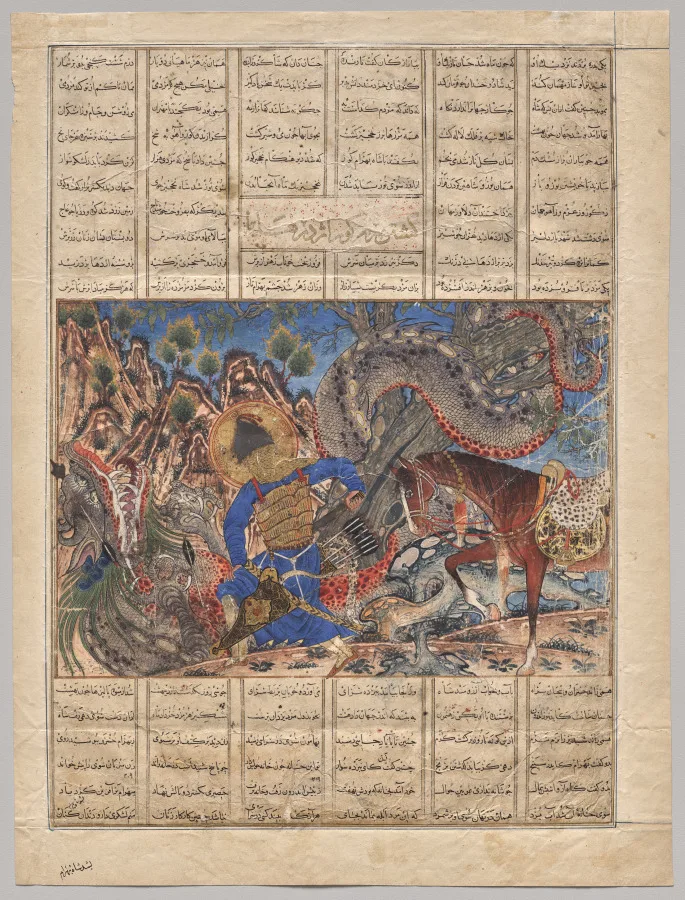
Bahram Gur Slays a Dragon (verso), from a Shahnama (Book of Kings) of Firdausi (940–1019 or 1025), known as the Great Mongol Shahnama
IllustrationjpgCC0
Commercial OKView →
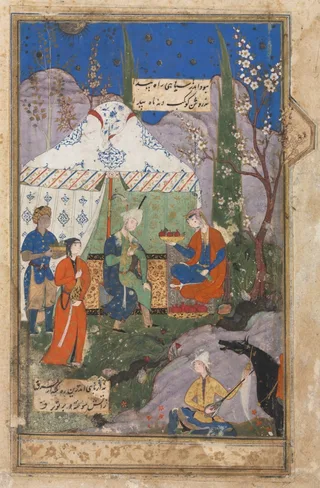
An Episode from the Story of the Sasanian King Khusrau and His Beloved Shirin, from a Khamsa (Quintet) of Nizami (1141–1209) (verso)
IllustrationjpgCC0
Commercial OKView →
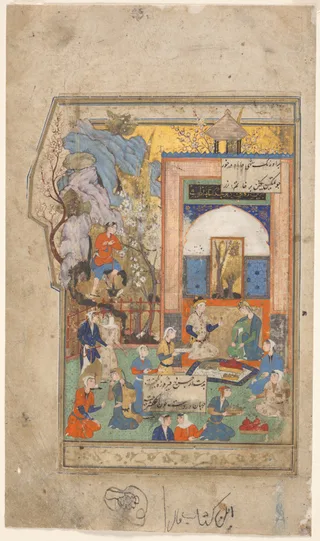
Yusuf and Zulaykha (recto), from an Anthology of Persian Verses, including the Haft Awrang (Seven Thrones) of Jami: The Fifth Throne
IllustrationjpgCC0
Commercial OKView →